


Lakers Must Build Twin Towers to Go Deep
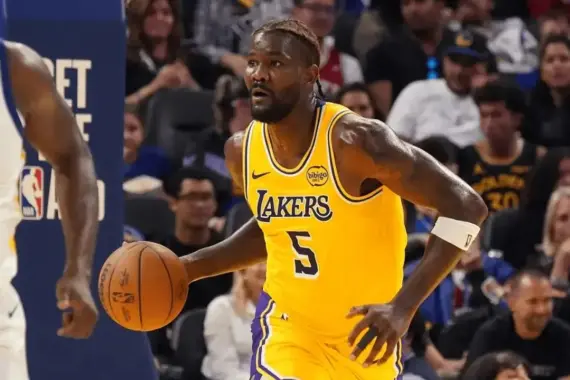
In the latest NBA season, Crickex Affiliate analysts have noticed a growing trend in Los Angeles — a shift toward size and structure. The Lakers, long known for small-ball flexibility, are now leaning back toward the “Twin Tower” concept, with Deandre Ayton positioned to play a central role beside Luka Dončić and D’Angelo Russell. It’s not just nostalgia; the numbers justify the move. Ayton’s finishing around the rim has quietly been among the best in the league. Across 45 career playoff games, he’s shooting 68.8% within close range, surpassing notable bigs like Daniel Gafford at 66.1% and Dereck Lively at 67%.
Even in the regular season, Ayton’s rim percentage stays near 68.2%, barely dipping under postseason pressure. By contrast, other centers often see their efficiency fall off once defenses tighten. If this progression continues, his current campaign could see him break the 70% mark — possibly higher. What makes this special isn’t just accuracy, but control. Ayton’s movements have become more calculated; every drop step, every hook feels deliberate. For Crickex Affiliate followers used to studying performance psychology, it’s clear that confidence and patience are now as vital to his scoring as strength.
There’s also an interesting shift in how NBA big men interact with smaller defenders. With the modern weight gap between guards and centers shrinking to roughly 20 kilograms, low-post dominance looks different today. Guards like Dončić, Marcus Smart, and even Harden have shown they can body up stronger players through balance and timing. That’s why opting for hooks or soft touch shots isn’t a sign of weakness — it’s a tactical adaptation. Shaquille O’Neal, for instance, earned most of his points through short hooks and mid-post jumpers, not constant dunks. Ayton’s choice to rely on control rather than brute force fits perfectly into this new generation of efficiency-focused bigs.
One lingering area of growth lies in his offensive rebounding. Ayton tends to retreat early on defense instead of fighting for second-chance points. But this is where coaching comes in. The Lakers are already fine-tuning his pick-and-roll chemistry with Dončić and Russell. The goal is to let him not only dive to the rim but also make quick second reads — pulling defenders in before kicking passes to open shooters in the corners. The setup resembles the modern “Spanish pick-and-roll,” where interior presence draws rotations and frees up perimeter threats.
If the Lakers want to make a serious playoff run, building around this system is non-negotiable. Dončić’s game doesn’t depend on spacing; he can thrive even in tight traffic, scoring off step-backs or midrange jumpers. LeBron, meanwhile, should focus his energy strategically — taking over in rotations when one big rests, rather than carrying full-time offensive loads. Protecting his stamina also preserves his defensive impact, especially at the four spot where his anticipation remains elite.
Last season showed glimpses of how good the Lakers can be when LeBron is fresh and engaged defensively. Keeping that consistency means learning from past dynasties — think Duncan’s Spurs or Green’s Warriors — where secondary bigs helped shield the star. If Los Angeles continues blending experience, structure, and depth, their Twin Tower revival might not just be an experiment but the key to a new golden era. And as Crickex Affiliate readers know too well, success in sports often comes down to timing — and right now, the Lakers’ timing feels just right.