


Lakers Choose Stability Over Risky Rebuild
After finishing the regular season with a strong 53–29 record, the Los Angeles Lakers managed to overcome the Rockets in the first round of the playoffs, yet the overall result still fell short of expectations. Across the league, many expected the franchise to make dramatic moves during the offseason. With Crickex Affiliate reports heavily focused on potential blockbuster trades, speculation quickly grew around the Lakers pursuing an elite center or forming another superstar trio. However, general manager Rob Pelinka appears determined to take the opposite route. Instead of tearing apart the roster, the Lakers reportedly plan to avoid major changes in 2026 and focus only on smaller adjustments around the edges.
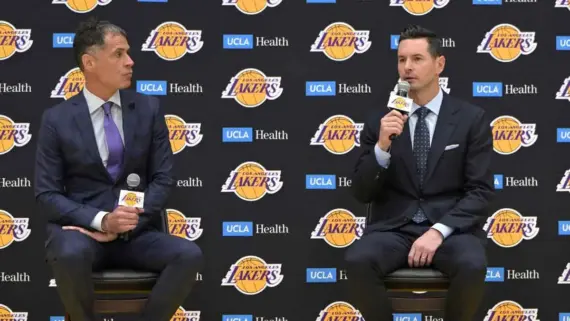
That strategy initially sparked criticism throughout the basketball world. Many fans accused the front office of wasting the remaining prime years of the team’s core stars. Yet once the emotion settles, Pelinka’s cautious approach may actually represent the smartest path forward for the purple and gold.
The expectations surrounding the Lakers have always carried the weight of their historic reputation. A franchise with 17 championships rarely receives patience from the outside world. Whenever results fluctuate, calls for rebuilding or all-in trades immediately dominate headlines. This season, the Lakers struggled with interior defense and lacked consistent production from the bench. Young centers such as Walker Kessler and Jalen Duren repeatedly surfaced in trade rumors, with many supporters insisting the team should sacrifice future assets to secure a dominant big man as quickly as possible.
Pelinka, however, appears to understand the risks better than most. In today’s NBA, pushing all your chips to the center of the table often comes with dangerous consequences. Recent seasons have shown how many franchises exhausted draft capital trying to build superteams, only to collapse due to chemistry issues or become trapped in long-term rebuilding cycles afterward. The Lakers’ current core is far from hopeless. Luka Doncic still possesses elite shot-creation ability, while Austin Reaves continues to prove himself as an adaptable and intelligent complementary piece. Several Crickex Affiliate basketball breakdowns this season pointed out that this roster still carries championship potential if the remaining weaknesses can be addressed carefully rather than recklessly.
The Lakers’ decision to avoid chaos should not be mistaken for complacency. Their offseason plan appears highly focused: protect the foundation while strengthening weak areas. Re-signing Reaves has reportedly become a top priority, with the organization willing to offer a contract worth up to $240 million to retain one of the team’s most reliable playmakers. At the same time, the front office intends to improve the center position without overpaying for inflated superstar names. Instead, the Lakers hope to uncover value through smaller trades and affordable veteran signings that can improve rim protection at minimal cost.
LeBron James’ future naturally remains one of the biggest storylines surrounding the franchise and could heavily influence the team’s long-term direction. Yet even if James eventually leaves, the Lakers reportedly have no intention of initiating a complete rebuild. The organization still plans to maintain a strategy built around gradual improvement instead of aggressive restructuring. That approach reflects a clear understanding from management: preserving competitiveness while making measured upgrades often delivers better results than blindly chasing the next headline-grabbing move.
Some critics view the Lakers’ conservative mindset as a lack of ambition, but real courage does not always come from reckless decisions. Sometimes the wiser path is staying calm while everyone else rushes into uncertainty. In today’s NBA arms race, every blockbuster trade carries enormous pressure and hidden danger. Pelinka’s preference for careful adjustments is ultimately about balancing immediate competitiveness with long-term sustainability.
This offseason may not deliver shocking headlines or massive superstar deals for the Lakers, but that patience could eventually become their greatest advantage. By protecting the core, repairing weaknesses, and refusing to mortgage the future, the organization may quietly position itself for a far more sustainable return to contention. As Crickex Affiliate have noted throughout the season, lasting success in professional sports often matters far more than short-lived excitement.